Producing biomethane continuously: why every shutdown matters
Monday, 8 a.m. Six Waga Energy technicians and engineers arrive at Veolia's landfill site in Chatuzange-le-Goubet, in southeastern France. Their mission: perform the annual maintenance of the WAGABOX® unit that upgrades landfill gas into biomethane injected into the gas grid.
Designed to operate 24 hours a day, 7 days a week, the unit is remotely monitored and controlled from Waga Energy's headquarters in Eybens, near Grenoble. But like any industrial facility, it must be taken offline at regular intervals for inspection, maintenance, and upgrades. This is a sensitive operation because every hour of downtime matters: the less time the equipment is unavailable, the more biomethane it produces, the more value it generates for partners, and the more CO₂ emissions it helps avoid.
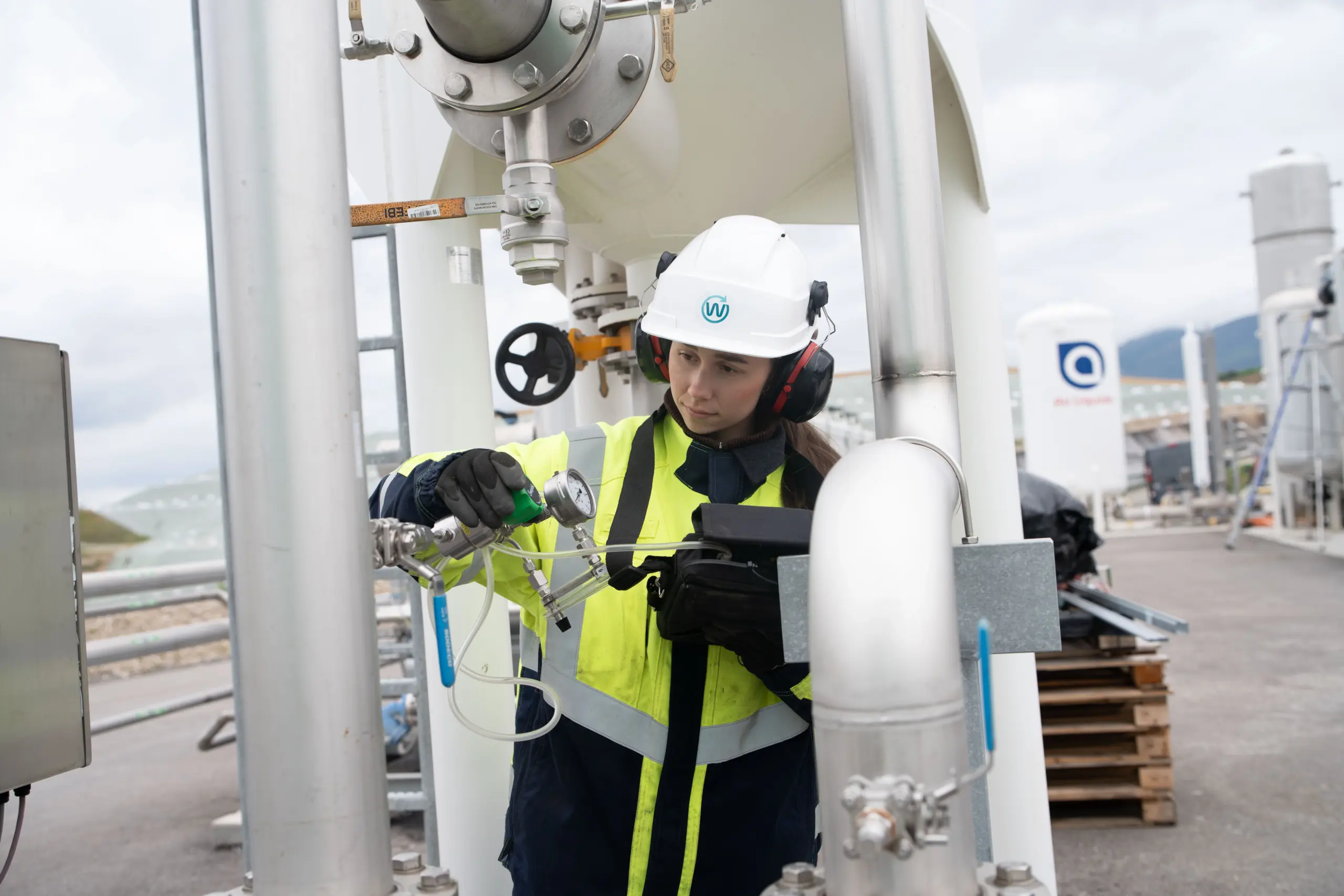
Routine inspections and equipment checks help ensure the long-term reliability and performance of WAGABOX® units.
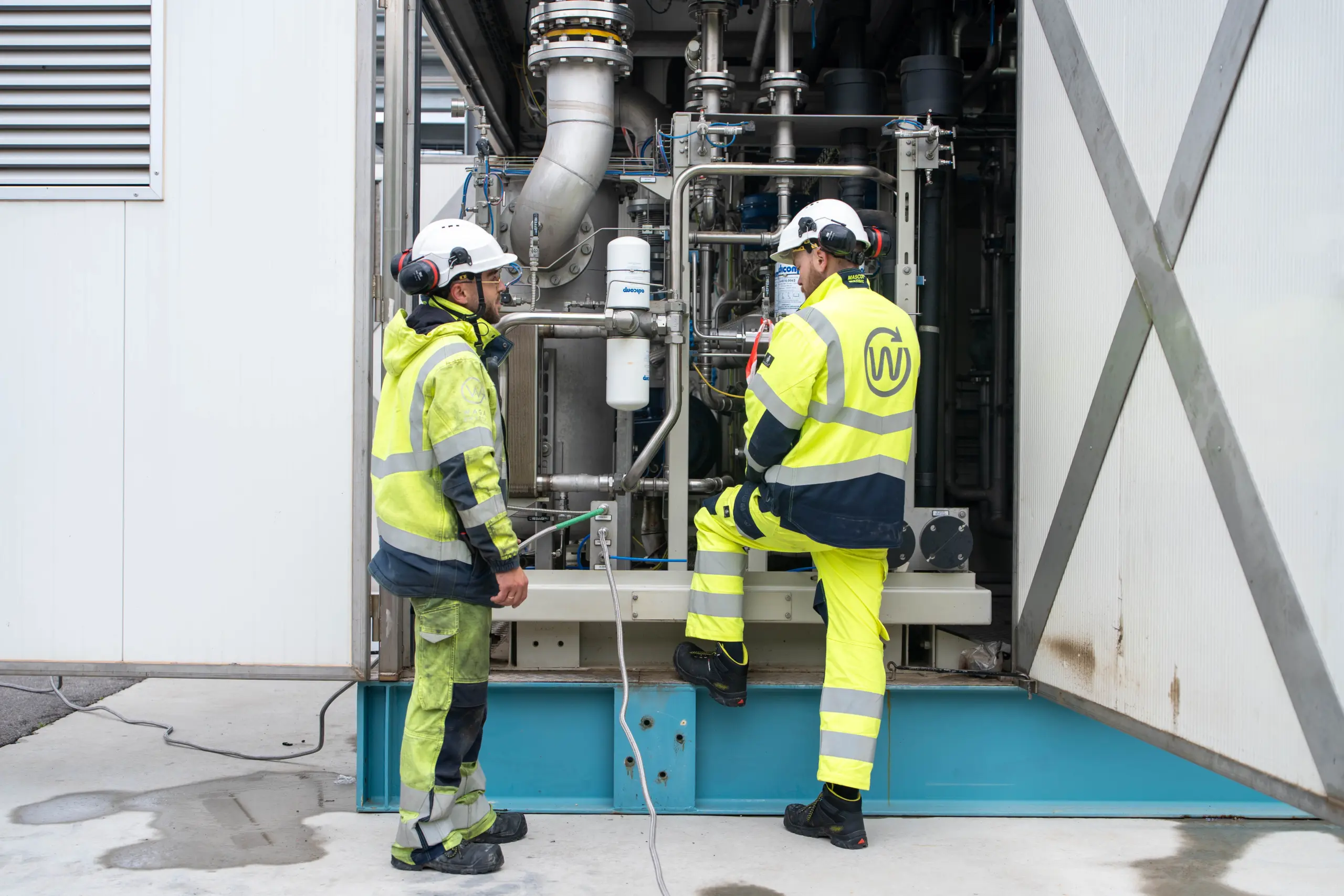
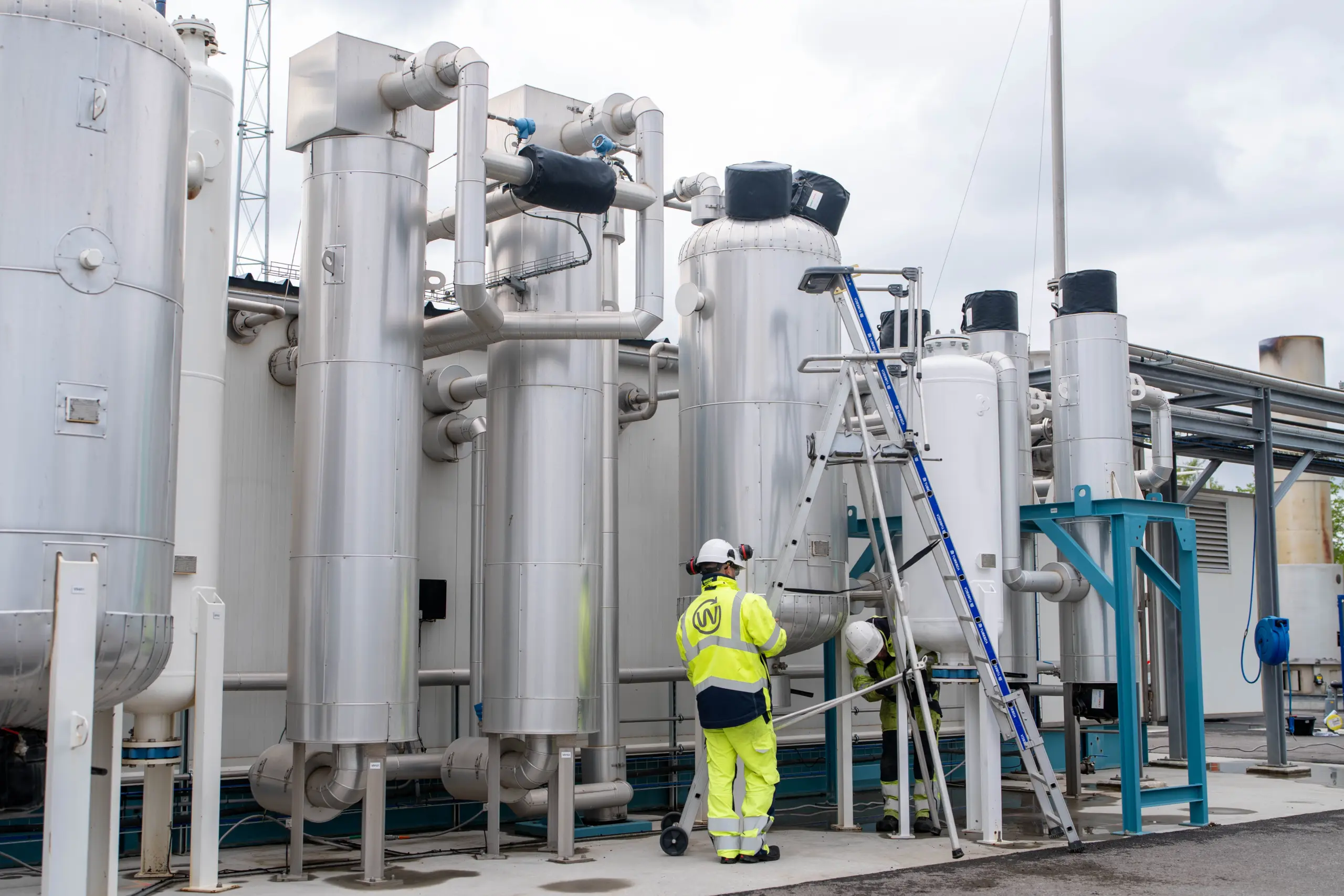
Maintenance technicians inspect and service equipment at the WAGABOX® unit in Chatuzange-le-Goubet
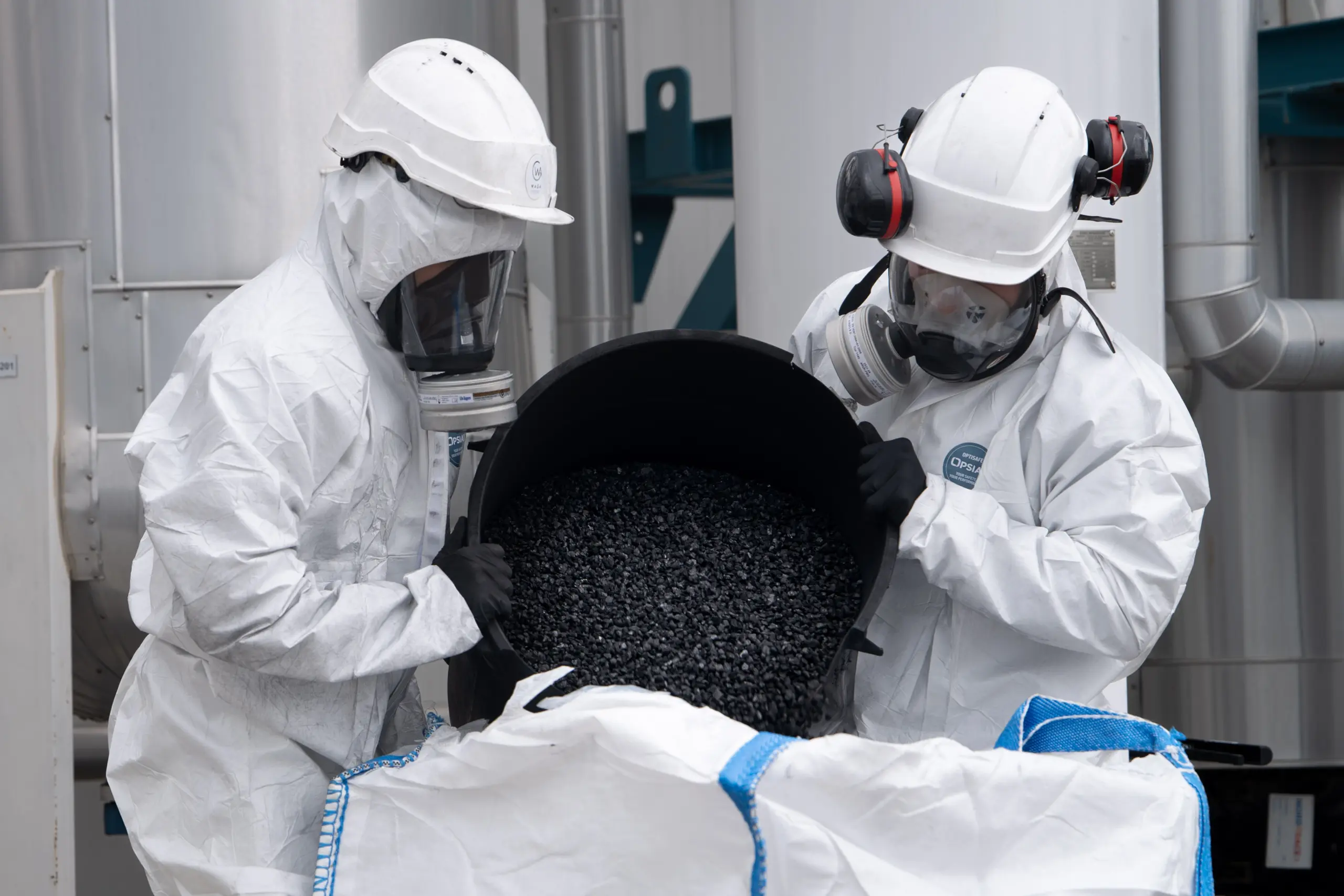
Technicians replace the charbon and carry out specialized maintenance operations to maintain optimal unit performance.
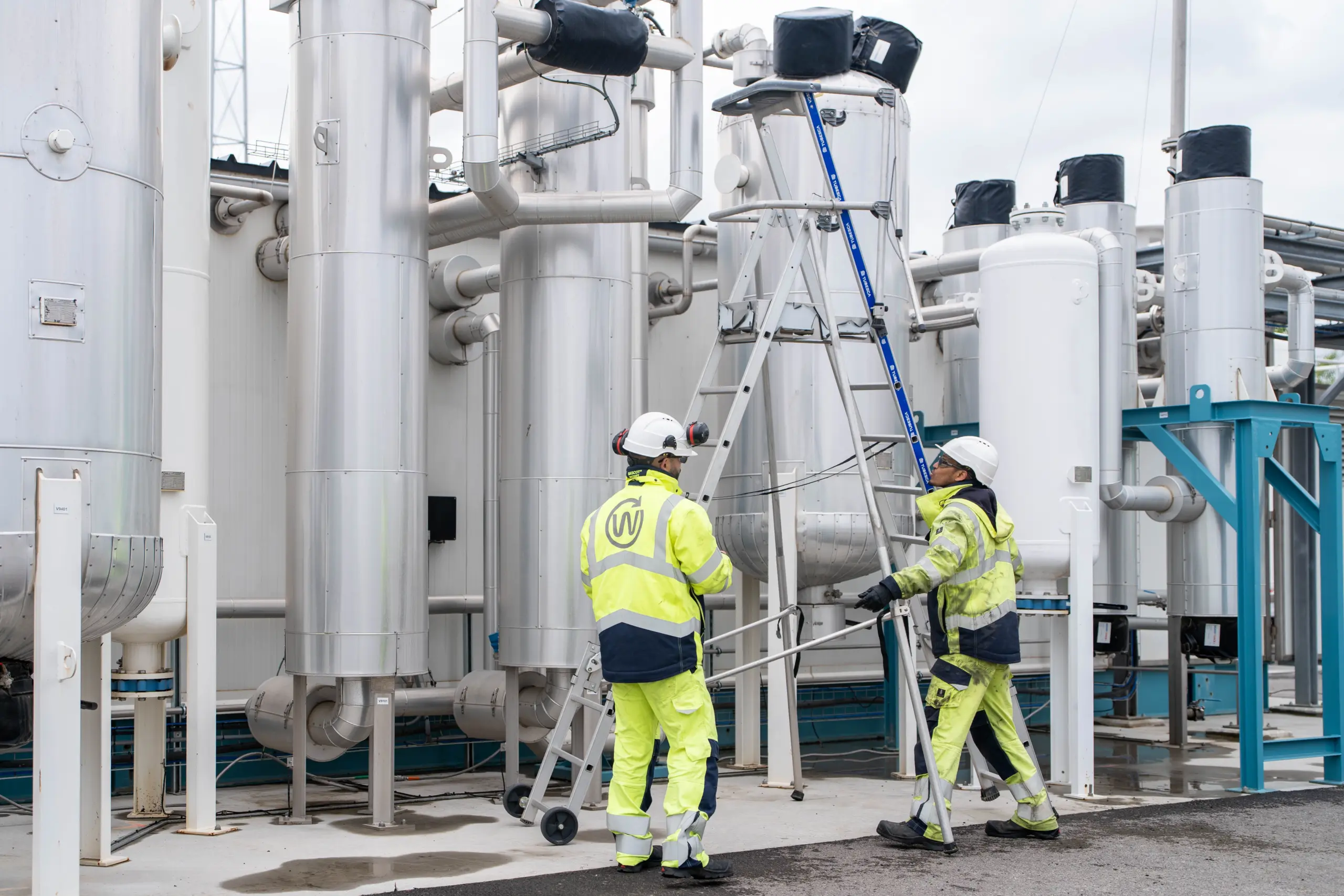
Detailed inspections and performance checks help keep WAGABOX® units operating safely and efficiently throughout the year.
The WAGABOX® maintenance: planned like a critical mission
The maintenance operation was prepared several weeks in advance. Tasks were identified, parts ordered, teams mobilized, and logistics organized down to the smallest detail. The previous week, containers carrying tools, personal protective equipment, and the parts required for the work were delivered to the site, along with several pallets of consumables and spare parts. Once the WAGABOX® unit is shut down, the clock starts ticking.
"Maintenance operations are scheduled every 8,000 operating hours," explains Matthieu Rouvière, one of Waga Energy's traveling maintenance team leaders. "We overhaul compressors and other equipment in accordance with manufacturers' recommendations. Our work covers both preventive maintenance and corrective operations that can be planned during the annual shutdown. Depending on the type of maintenance, the number of interventions required can vary significantly."
Revamping: how Waga Energy improves units already in operation
Beyond preventive maintenance, these planned shutdowns also provide an opportunity to upgrade units already in service. Innovations developed by Waga Energy's Research & Development and Process Engineering teams are progressively rolled out across the existing fleet.
"Innovations integrated into the latest generations of WAGABOX® units are installed on units already in operation whenever it makes sense to do so. That's what we call revamping," continues Matthieu Rouvière.
This approach reflects one of the key principles of Waga Energy's business model: the company does not simply design and install its units. It also operates, monitors, maintains, and continuously improves them throughout the duration of each contract. This comprehensive responsibility enables Waga Energy to leverage experience gained from every site, continuously improve fleet performance, and provide customers and partners with a high level of reliability.
Maintenance shutdowns may also be used to conduct regulatory inspections, particularly on pressure equipment. These inspections are carried out by an independent organization in compliance with applicable regulations. In some cases, tanks must be emptied to allow for inspections and leak-tightness tests before the unit can be returned to service.
Continuous monitoring, expert maintenance, and guaranteed performance.
Waga Energy operates and supervises each WAGABOX® unit to ensure stable, efficient biomethane production throughout the entire lifespan of the project.
No compromises on safety: a culture embedded in every intervention
As always at Waga Energy, safety remains the number one priority. Every day begins with a safety briefing to review procedures, identify potential risks, and coordinate activities.
"We sometimes simulate emergency situations, such as a worker becoming ill while elevated on a lift platform, to ensure the entire team remains vigilant and maintains the right reflexes," says Matthieu Rouvière.
At Chatuzange-le-Goubet, the WAGABOX® unit was brought back online after four days. The schedule was met. But the work does not end there. The following week, a lessons-learned meeting is held at headquarters. Every operation is reviewed and evaluated to identify what worked well, what could be improved, and which insights should be incorporated into future maintenance campaigns.
This continuous improvement process becomes increasingly important as the WAGABOX® fleet continues to grow. With units operating in France, Spain, Canada, and the United States, maintenance teams now work at a sustained pace. Operations follow one another continuously, sometimes with two maintenance shutdowns taking place in the same week, always driven by the same objective: work quickly, efficiently, and safely.
"We have made tremendous progress over the past few years," observes Matthieu Rouvière. "Our technicians have become highly experienced on our installations. They know these operations inside out, and everything now runs like clockwork."
Thanks to this rigorous organization, the commitment of its teams, and its complete control over the operating chain, Waga Energy is able to guarantee 95% availability across its WAGABOX® fleet. This industrial performance is at the core of Waga Energy's promise: producing more biomethane, maximizing the value created at landfill sites, and making a tangible contribution to reducing greenhouse gas emissions.
At a glance

Annual maintenance is scheduled every 8,000 operating hours
That ensure the reliability and performance of WAGABOX® units.

Every shutdown is carefully planned to minimize downtime
Helping Waga Energy maintain a 95% fleet availability rate and maximize biomethane production.

Maintenance also drives continuous improvement
Allowing new technologies and performance enhancements to be deployed across existing WAGABOX® units through revamping.