
A by-product of waste management
Recovering landfill gas (LFG) to produce biomethane is technological and economic challenge due to the inherent variability of gas flow and composition, which are continuously influenced by a range of environmental, operational, and waste-related factors.
Three types of gas in varying proportions
LFG is a mix of three gases in varying proportions: biogas, generated by the decomposition of organic matter contained in the waste; air, which infiltrates into the collection network; and various volatile organic compounds released from waste materials.
1) The biogas produced spontaneously by the biological decomposition of organic matter
Non-hazardous waste disposed of in a landfill contains a significant amount of organic matter, in the form of food waste, green waste, paper, cardboard, leather, wood, etc. It represents about 50% of overall tonnage and still 25% when waste is sorted upstream.
Inside the cells, the organic matter is degraded by various micro-organisms which thrive in humid and oxygen-deprived environments. Among them are methanogenic micro-organisms, which produce methane (CH4), the main component of biogas, together with carbon dioxide (CO2). The biogas also contains traces of hydrogen sulfide (H2S), ammonia (NH3), hydrogen (H2), organic sulfur compounds (called mercaptans) and various acid gases or aerosols.
The proportion of each of these components varies over time as the organic matter passes through different degradation stages.
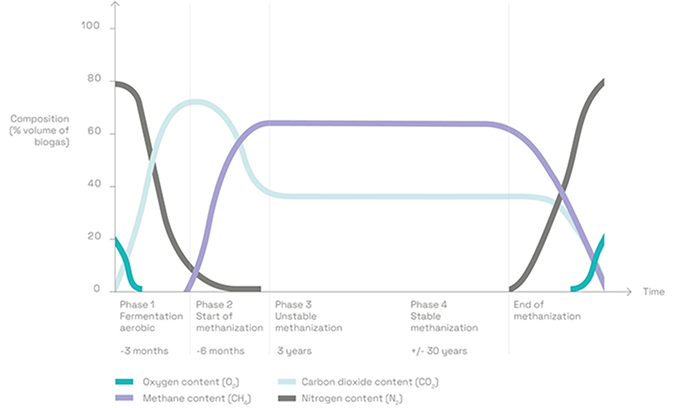
Evolution of landfill gas composition throughout the waste degradation process.
2) The air entering the collection network
Methane is a highly flammable gas and a powerful greenhouse gas. Over a 100-year timeframe, its global warming potential (GWP) is approximately 28 times greater than that of carbon dioxide (CO₂), while over a 20-year timeframe it is approximately 80 times greater, reflecting its strong short-term impact on climate (source: IPCC Sixth Assessment Report). Landfill operators therefore collect landfill gas not only to prevent fire and explosion hazards, but also to reduce methane emissions to the atmosphere. Gas collection and treatment also help limit potential health impacts associated with exposure to landfill gas and trace compounds, while reducing odor nuisance, primarily caused by hydrogen sulfide and other sulfur compounds.
A standard LFG collection system consists of a blower connected to a network of wells installed vertically and/or horizontally within the waste mass. These wells transport the gas to a flare or an energy recovery unit. Landfill systems are never completely airtight, so the gas collection system draws in ambient air (oxygen and nitrogen). Air intrusion occurs primarily through imperfections in wells, pipework, and connections, as well as through the landfill cover. Areas with higher cover permeability, particularly side slopes and the interfaces between the cover system and gas extraction infrastructure, are often significant pathways for air ingress. The amount of air present in the LFG therefore depends on blower settings, the integrity of the collection network, the quality of seals and connections, and the permeability of the landfill cover.
3) Volatile organic compounds (VOCs)
The collection system also captures trace compounds released from the waste, including substances originating from paints, solvents, detergents, cosmetics, and other consumer products. These compounds include hydrocarbons, siloxanes, sulfur compounds and other volatile organic compounds (VOCs), as well as aerosols, dust and fine particles.
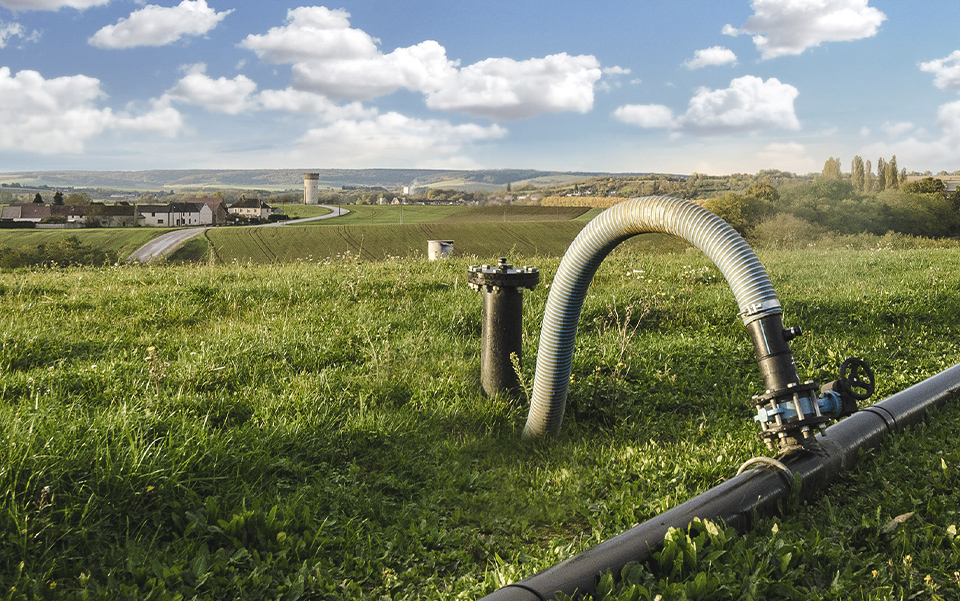
Landfill gas is collected through a network of wells and pipes before being treated or recovered for energy production.
The chemical composition of LFG
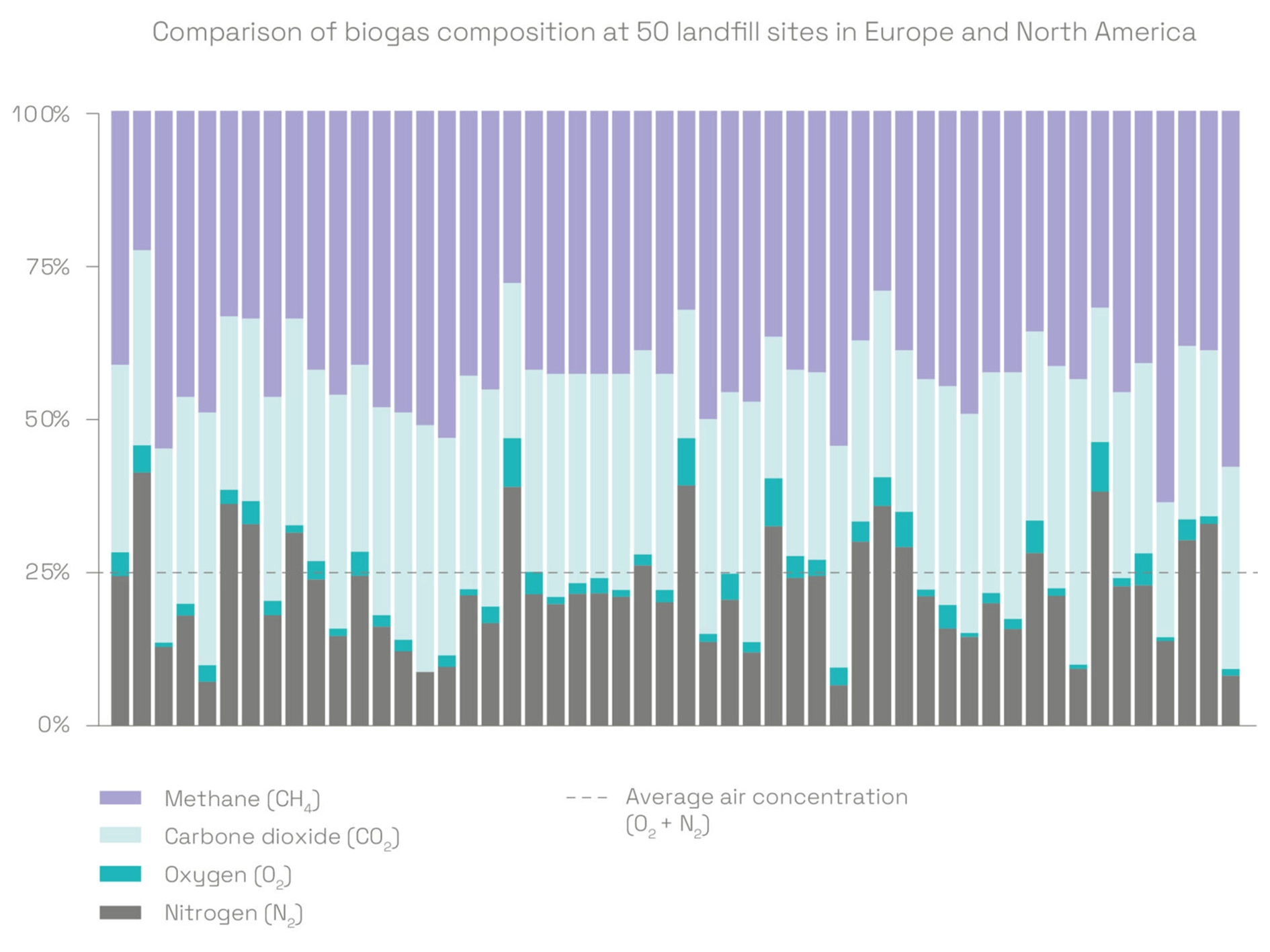
The gas arriving at the flare or the energy recovery unit is a mixture of methane (CH4), carbon dioxide (CO2), oxygen (O2) and nitrogen (N2), as well as various trace compounds. The proportion of each gas varies from one site to another, depending on the type and age of the waste, the stage of waste degradation, the operating conditions of the gas collection system, and environmental factors.
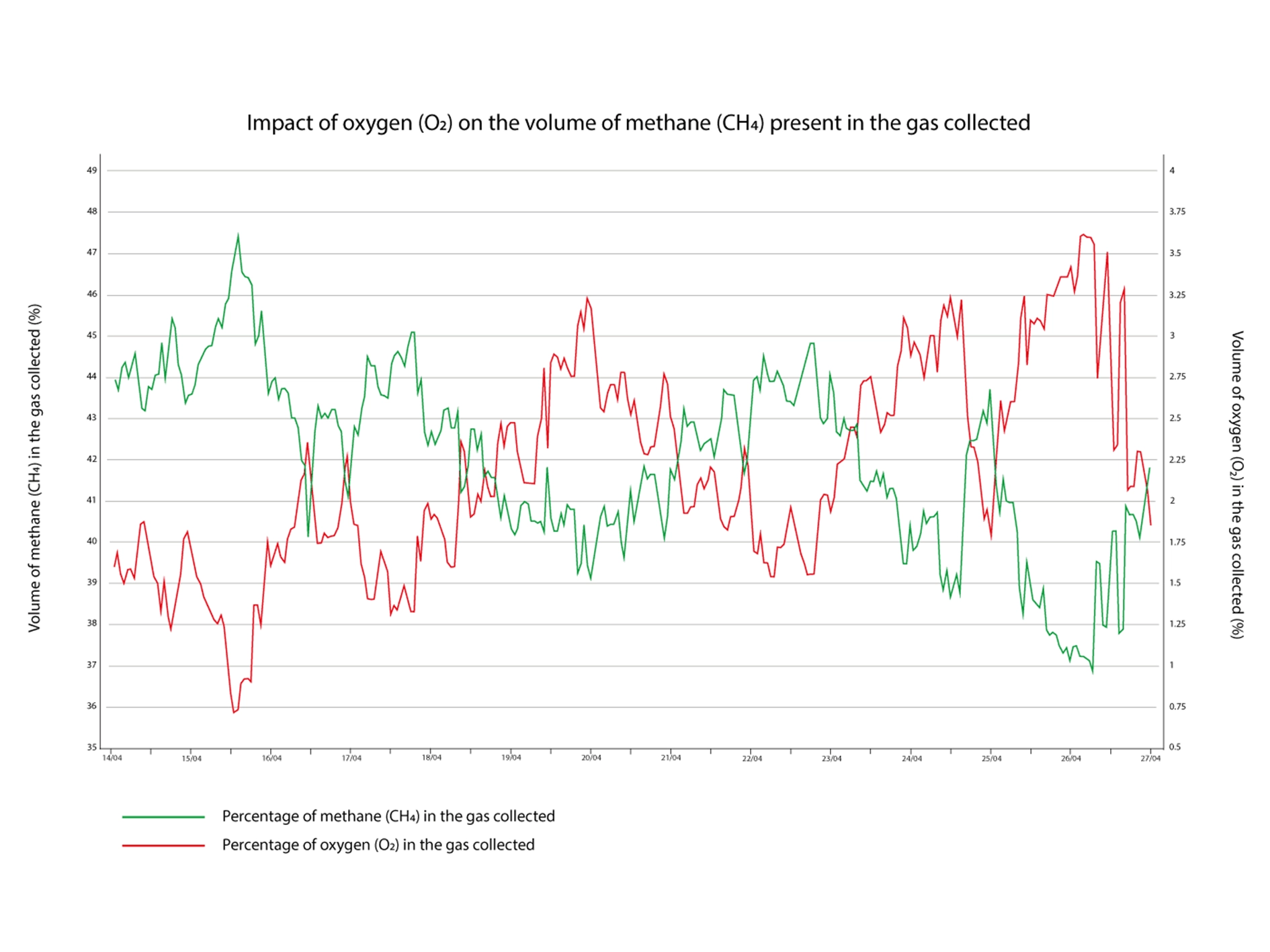
Changes in biological activity driven by factors such as moisture content and temperature occur gradually. In contrast, rapid variations in the quality and quantity of captured landfill gas are typically associated with short-term changes in atmospheric pressure or with more cyclic fluctuations in temperature. Falling barometric pressure tends to promote gas release from the waste mass, whereas rising pressure can temporarily restrict gas migration and influence the amount of air drawn into the collection system.
Methane (CH4)
LFG gas contains 40 to 50% methane (CH4) on average.Methane is an energy-rich gas and the main component of fossil natural gas, which is widely used for heating and transportation.
The most common way to recover energy from LFG is to burn it in a engine or turbine to generate electricity.However, the energy efficiency of this approach is relatively low. WAGABOX® technology makes it possible to separate the methanemethane from the other components of landfill gas, allowing it to be injected directly into the natural gas grid as a renewable substitute for fossil natural gas.
Carbon dioxide (CO2)
The carbon molecules found in LFG, in the form of carbon dioxide (CO2) or methane (CH4), come from the degradation of organic matter. The molecules were originally absorbed by living organisms as they grew (via photosynthesis), and find their way back into the atmosphere during degradation. Therefore, this organic carbon does not actually increase the quantity of carbon present in the atmosphere (short carbon cycle), whereas the carbon emitted by burning fossil fuels does.
As for non-biodegradable carbon contained in synthetic organic materials such as plastics, it remains trapped in the ground. A landfill site therefore acts as a “carbon sink”, or in other words, a reservoir that contributes to reducing the quantity of carbon in the atmosphere.
Oxygen and nitrogen (O2 and N2)
LFG contains 10% to 30% air. High air concentrations make methane separation much more difficult. Conventional filtration technologies are ineffective because methane, oxygen and nitrogen molecules are similar in size, and mixture of methane and oxygen can become explosive under certain conditions.
WAGABOX® technology uses cryogenics to separate the methane from the air gases. This breakthrough technology guarantees a high quality biomethane that can be injected directly into natural gas grids, regardless of the levels of oxygen and nitrogen in the LFG.
Hydrogen sulfide (H2S)
Hydrogen sulfide (H2S) is a highly toxic and corrosive gas known for its characteristic “rotten egg” odor. It attacks steel and copper and must be removed before energy recovery begins to prevent damage in equipment.
Concentrations of hydrogen sulfide and other sulfur compounds (mercaptans) in LFG tend to be higher at landfills receiving sulfur-rich industrial waste, such as gypsum drywall from the construction industry. At some sites, H2S concentration can occasionally reach 10,000 ppm at times (based on Waga Energy measurements).
Sulfur compounds represent a safety concern for personnel, a source of odor nuisance for nearby communities, and an additionnal cost that must be taken into account when developing an energy recovery project.
A production rate which fluctuates over time
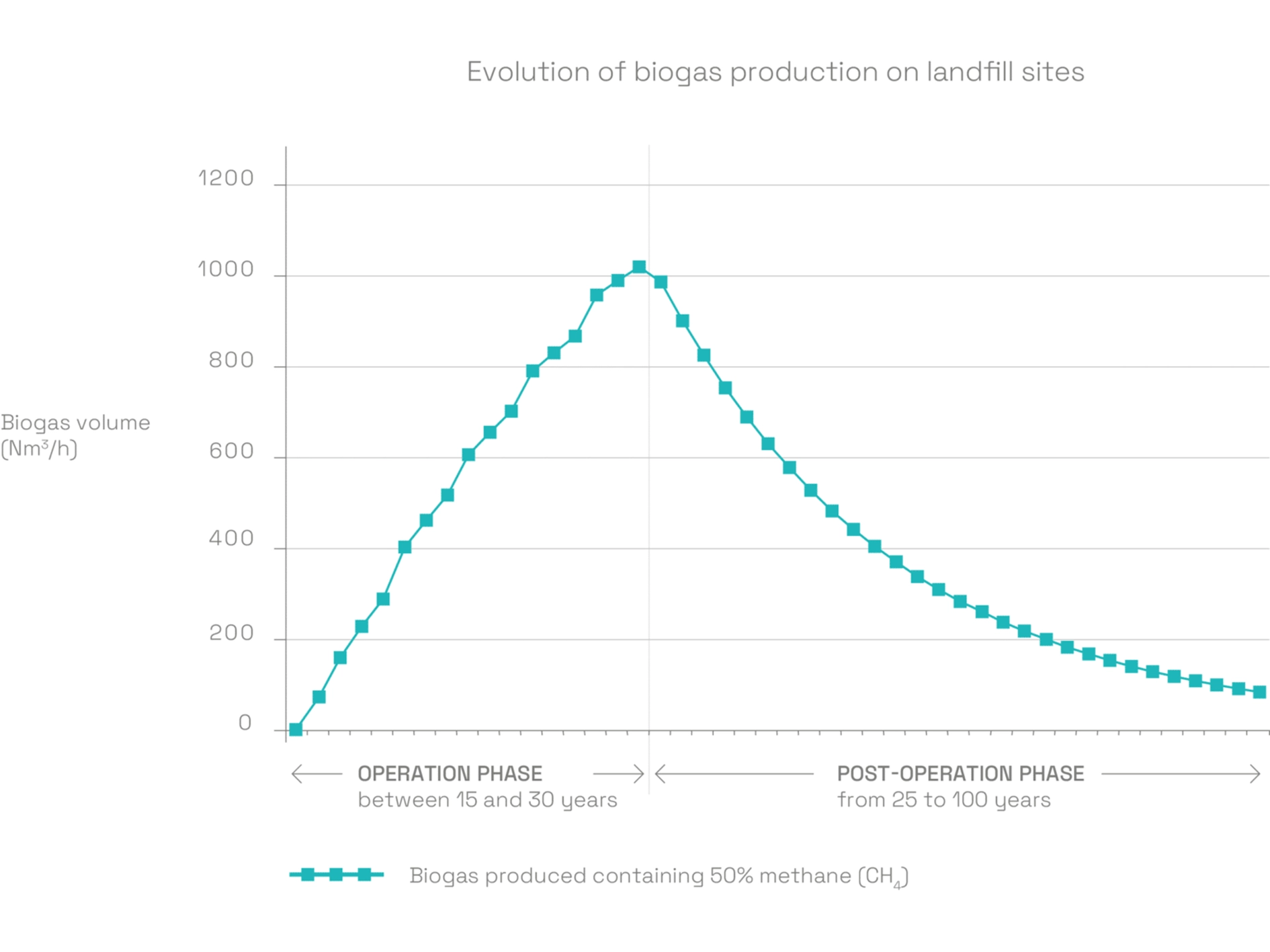
Optimizing energy recovery at a landfill site
Enhanced extraction mode
The blower draws in the LFG at a high rate and maintains the vacuum in the landfill at a high level. It helps to reduce odor nuisance but can increase the concentration of air up to 30%.
Recovery mode
The blower keeps the vacuum at a constant, low level. If the valves are precisely controlled and the LFG collection network is sufficiently airtight, the air content can be kept to below 15%.
In practice, landfill operators often need to combine these different settings according to the production level of the different cells and the various, sometimes conflicting, constraints: methane recovery, odor nuisance reduction, polluting emission reduction, etc.
Managing bioreactor landfills
This technology emerged in the US during the 1990s. The goal of bioreactor landfills is to speed up organic matter degradation and stabilize waste by enclosing it in a confined chamber and irrigating it with landfill run-off water, or so-called leachate. This system stimulates microbial activity while also diluting any inhibitors (ammonia, salts, sulfur, etc.). When the cell is covered with an airtight membrane, a bioreactor needs to be installed to enable the organic matter to decompose and prevent the waste from becoming “mummified”.
At a glance

A Complex and Evolving Gas Mixture
Landfill gas is not just biogas. It is a constantly changing mixture of methane, carbon dioxide, air and trace compounds, whose composition varies according to waste characteristics, weather conditions and landfill operations.

A Valuable Source of Renewable Energy
Methane generated by the natural decomposition of organic waste represents 40 to 50% of landfill gas. Once purified, it can be converted into biomethane and injected into the natural gas grid as a renewable alternative to fossil gas.

A Technical Challenge to Recover
Fluctuating gas flows, air infiltration and the presence of contaminants make landfill gas difficult to valorize. Advanced upgrading technologies are required to consistently produce pipeline-quality biomethane.